
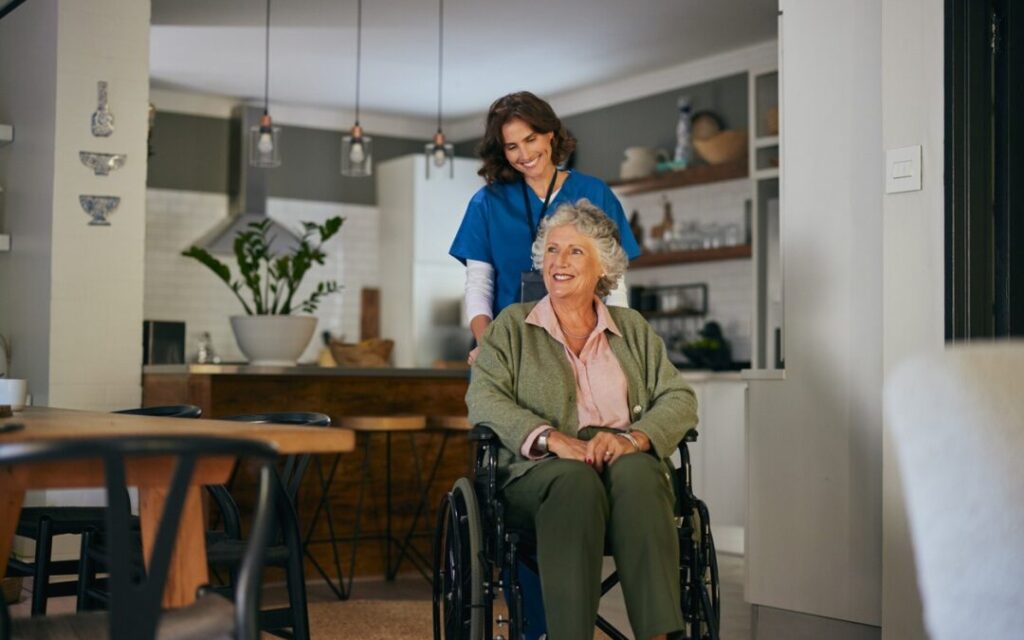
As major regional health systems across Maryland—such as Johns Hopkins, MedStar, and Luminis Health—increasingly implement “Hospital at Home” models, seniors are routinely discharged faster to recover in their own bedrooms.
While recovering at home is gentler on a senior’s emotional well-being, the reality for family caregivers can be overwhelming. Overnight, a residential living space must adapt to handle complex post-acute needs: surgical drains, IV lines, oxygen equipment, or strict wound management.
Preparing a living space for complex senior recovery requires transforming a domestic setting into a safe, functional, and sanitary recovery zone without causing stress or panic.
🛠️ Step 1: Converting the Primary Living Zone
When a senior returns home with limited mobility or clinical equipment, navigating stairs or narrow hallways is rarely safe.
- Main-Floor Living: Move the primary sleeping area to the first floor near a full bathroom if possible. A temporary hospital bed or adjustable bed with firm edge support makes transfers easier for both the senior and caregivers.
- Clear 36-Inch Pathways: Measure doorways and pathways to ensure at least 36 inches of clearance for walkers, transport chairs, or medical equipment poles. Remove throw rugs, secure loose electrical cords, and push decorative furniture out of high-traffic zones.
- Dedicated Clinical Station: Designate a clean, hard surface (a sturdy nightstand or foldable tray table) near the bed strictly for medical supplies—such as wound dressing, blood pressure cuffs, extra gloves, and hand sanitizer.
🛁 Step 2: High-Acuity Bathroom Modifications
Bathrooms present the highest fall risk during acute recovery due to wet tiles and low surfaces.
  [ LOW-SURFACE TOILET ] ──> [ ADD RAISED SEAT / COMMODE ] ──> Prevents surgical site strain
  [ WET TUB/SHOWER ]     ──> [ ADD TUB TRANSFER BENCH ]    ──> Eliminates stepping over ledge
  [ WEAK BALANCE ]       ──> [ INSTALL SECURE GRAB BARS ]  ──> Never rely on towel racks
- Shower Seats & Transfer Benches: Install a weighted shower chair or a tub transfer bench so the senior can slide over the tub wall safely without stepping over a high ledge.
- Elevated Toilet Seats: Add a raised toilet seat with padded handles to minimize hip or knee flexion strain during post-surgical recoveries.
- Weight-Tested Grab Bars: Ensure grab bars are anchored directly into wall studs near the toilet and shower. Never rely on standard towel racks for balance support.
💊 Step 3: Managing Complex Prescriptions & Lines
Managing multiple new medications alongside existing prescriptions is one of the most stressful parts of post-acute home care.
- Systematic Organization: Establish a clear medication log matching post-discharge orders. Use color-coded pill organizers or unit-dose bubble packs to prevent double-dosing.
- Line & Tubing Safety: If your parent has IV lines, oxygen tubing, or surgical drains, use wall-mounted adhesive clips or soft tubing covers to keep cords elevated off the floor, preventing tripping hazards or accidental dislodgement.
📊 Hospital-Grade Home Setup Checklist
| Recovery Zone | Essential Modifications | Primary Safety Objective |
| Bedroom / Recovery Area | Main-floor bed, firm mattress, call bell on nightstand | Minimizes stair hazards & enables rapid assistance |
| Hallways & Entrances | Motion-sensor nightlights, cleared pathways, non-skid flooring | Prevents disorientation and tripping during night visits |
| Bathroom | Grab bars, transfer bench, raised toilet seat, handheld showerhead | Converts slippery spaces into safe hygiene zones |
| Medical Station | Sanitized supply table, medical log, proper disposal bin | Keeps clinical supplies organized and sterile |
The Vanguard Difference: Bridging the Post-Acute Care Gap
Setting up the physical space is only half the battle. Executing a complex recovery plan requires continuous clinical vigilance—something family members should not have to carry alone.
This is where Vanguard Care Solutions transforms a stressful home discharge into a smooth, structured recovery through our Care Without Crisis framework:
- RN Clinical Oversight: Our Registered Nurses perform in-home assessments upon discharge to audit the recovery environment, reconcile post-hospital medications with primary physicians, and oversee clinical protocols.
- Hospital-to-Home Transitions: Our trained aides assist with safe transfers, mobility routines, personal hygiene, and meal preparation, ensuring your parent is never left unassisted during high-risk recovery windows.
- Preventing Hospital Readmissions: By tracking daily vitals, monitoring hydration, and catching early signs of infection or complications before they escalate, Vanguard protects your parent from unnecessary trips back to the emergency room.
- Restoring Family Roles: Delegating clinical logistics and physical care to our skilled team allows you to step back from being an overwhelmed “head nurse” and return to being a supportive, loving daughter or son.