
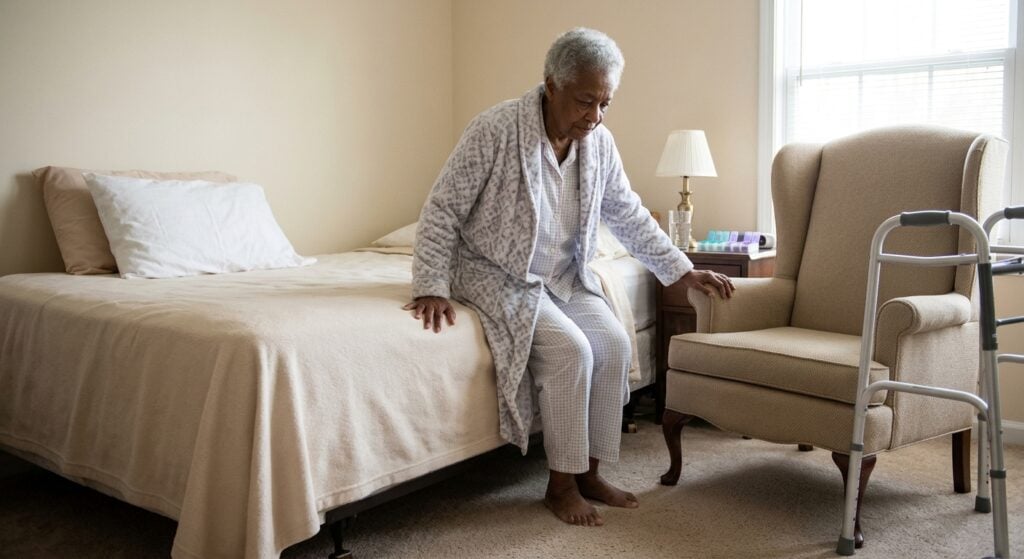
For many older adults, standing up from a bed or armchair triggers a sudden wave of lightheadedness, blurred vision, or unsteadiness. This reaction is frequently caused by orthostatic hypotension—a rapid drop in blood pressure that occurs when changing posture from lying down or sitting to standing. As blood temporarily pools in the lower body due to gravity, reduced blood flow to the brain can cause sudden dizziness, loss of balance, or fainting (syncope).
In aging adults, natural changes in blood vessel elasticity, dehydration, and the side effects of blood pressure or heart medications make orthostatic drops far more common. Left unmanaged, a brief dizzy spell during a routine trip to the bathroom can result in a devastating fall or emergency hospitalization.
For families across Montgomery, Howard, Prince George’s, Anne Arundel, and Charles counties, protecting a loved one with orthostatic hypotension requires structured daily habits. Combining gradual posture transitions, morning hydration pacing, environmental safety setups, and consistent daily observation keeps seniors steady, confident, and safe at home.
1. Mastering the “Sit-Pause-Stand” Transition Protocol
The highest risk for an orthostatic blood pressure drop occurs during the first 60 seconds after rising—especially first thing in the morning after lying flat all night. Rushing out of bed leaves the cardiovascular system no time to adjust to gravity.
                  ┌─────────────────────────────────────────┐
                  │   THE "SIT-PAUSE-STAND" SAFETY SEQUENCE │
                  └────────────────────┬────────────────────┘
                                       │
        ┌──────────────────────────────┼──────────────────────────────┐
        ▼                              ▼                              ▼
   Step 1: Gradual Sit            Step 2: 60-Second Pause        Step 3: Stabilized Stand
   ───────────────────            ───────────────────────        ────────────────────────
   • Roll onto side first         • Sit upright at bed edge      • Plant both feet flat on floor
   • Slowly push up to seated     • Perform gentle ankle pumps   • Rise slowly using firm support
   • Keep feet resting flat       • Confirm zero dizziness       • Pause 15 seconds before walking
Essential Posture & Transition Habits:
- Waking Up the Circulation First: Before sitting up in bed, encourage the senior to flex their ankles, wiggle their toes, and gently bend their knees while still lying down to get blood circulating back toward the upper body.
- The Mandatory Bedside Pause: Once seated on the edge of the mattress, maintain an upright posture for a full 60 seconds. If any lightheadedness, tunnel vision, or weakness occurs, remain seated until symptoms completely pass.
- Post-Meal Standing Caution: Blood naturally diverts to the digestive tract after eating—a trigger known as postprandial hypotension. Encourage resting quietly for 30 to 45 minutes after larger meals before attempting household walking or stairs.
2. Hydration Pacing and Daily Routine Adjustments
Low fluid volume directly lowers baseline blood pressure, making orthostatic drops sharper and more frequent. Because thirst signals weaken with age, seniors often wake up mildly dehydrated.
| Daily Routine Area | Common Orthostatic Trigger | Safe Home Care Adaptation |
| Morning Wake-Up | Standing immediately after 7–8 hours without fluids. | Offering a glass of water at the bedside before transitioning to the bathroom. |
| Meal Structure | Large, heavy carbohydrate meals that pull blood toward digestion. | Serving smaller, balanced meals spaced evenly throughout the day alongside steady hydration. |
| Bathing & Warmth | Hot showers or warm bathrooms that dilate blood vessels and lower blood pressure. | Using lukewarm water, keeping bathrooms ventilated, and bathing seated on a padded shower chair. |
| Prolonged Standing | Standing motionless at a bathroom sink or kitchen counter. | Placing a sturdy chair nearby for grooming or meal prep so tasks can be completed seated. |
3. Fall-Proofing High-Risk Home Pathways
Even with careful transitions, an unexpected dizzy spell can happen. Preparing the home environment ensures that if unsteadiness strikes, a senior has immediate physical support and a clear path.
- Clear Bathroom Pathways: Ensure the route between the bed and the bathroom is completely free of throw rugs, loose cords, or clutter, and illuminated with bright nightlights.
- Sturdy Seated Rest Points: Place firm, high-backed chairs with armrests in hallways or dressing areas so a senior can sit down immediately at the first sign of lightheadedness.
- Avoiding Sudden Bending: Picking dropped items off the floor causes rapid blood pressure shifts when straightening back up. Keep frequently used items at waist or counter height and utilize long-handled reachers.
🛡️ The Vanguard Advantage: Care Without Crisis
Managing orthostatic hypotension and sudden dizziness at home requires steady physical standby support, routine hydration pacing, and attentive daily oversight. Vanguard Care Solutions is a licensed Maryland Residential Service Agency (RSA) serving families across Montgomery, Howard, Prince George’s, Anne Arundel, and Charles counties.
Through our Care Without Crisis framework, Vanguard delivers structured in-home support designed to prevent dizziness-related falls, maintain safe daily routines, and protect senior independence.
       [ Comprehensive Home & Health Intake ]
                         │
                         ▼
  ┌──────────────────────────────────────────────┐
  │   Tailored Fall & Posture Safety Plan        │ ── Maps morning transitions, hydration & home pathways
  └──────────────────────┬───────────────────────┘
                         │
                         ▼
  ┌──────────────────────────────────────────────┐
  │   Supervised Professional Caregiver Support │ ── Standby transfer assistance, seated bathing & ADLs
  └──────────────────────┬───────────────────────┘
                         │
                         ▼
  ┌──────────────────────────────────────────────┐
  │    Proactive Symptom Escalation System       │ ── Rapid communication before falls or crises occur
  └──────────────────────────────────────────────┘
How Vanguard Supports Balance and Blood Pressure Stability in Maryland:
- Comprehensive In-Home Intake: Our team conducts a thorough in-home intake assessment, identifying high-risk transfer areas, evaluating daily mobility routines, and creating a customized care plan tailored to individual safety needs.
- Supervised Caregiver Support: Trained caregivers provide steady standby assistance during high-risk morning wake-ups and bathroom transfers, pace daily hydration and balanced meals, and support safe seated bathing routines.
- Vigilant Shift Documentation: Caregivers maintain detailed shift logs tracking daily fluid intake, meal completion, mobility stability, and any episodes of lightheadedness, giving family members clear, reliable shift updates.
- Proactive Symptom Escalation: Vanguard caregivers are trained to recognize early warning indicators of worsening instability—such as increased morning dizziness, unusual fatigue, or changes in gait steadiness—and report them immediately through our structured escalation system, allowing families and care providers to intervene long before a preventable fall or emergency room visit occurs.
Keep Every Step Safe and Supported at Home
Protect your loved one from sudden dizziness and preventable falls with structured, dependable daily care. Contact Vanguard Care Solutions today to learn how our Care Without Crisis home care support plan brings safety and peace of mind to families across Central Maryland.
📞 Call Us: 301-327-1444
🌐 Visit: vanguardcaresolutions.com