
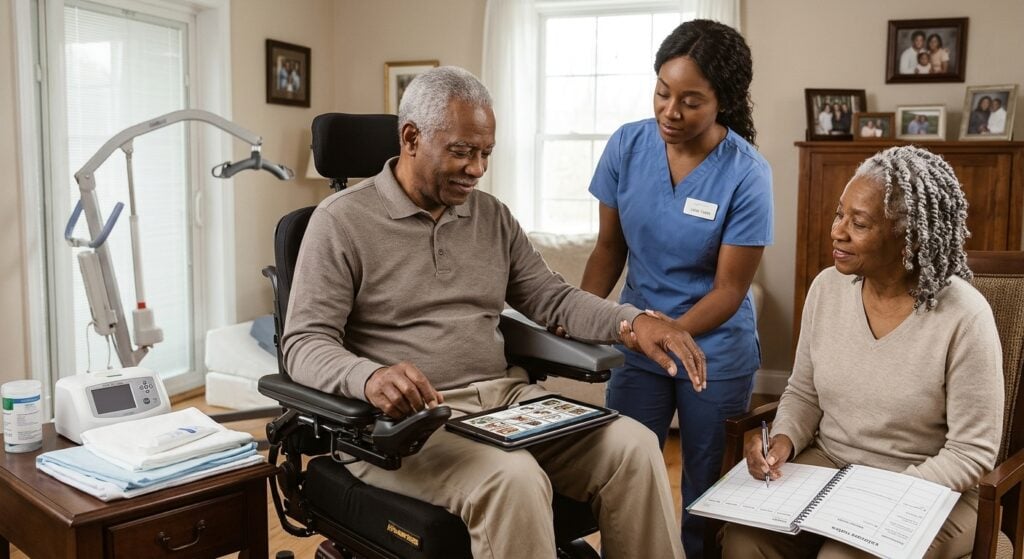
Amyotrophic Lateral Sclerosis (ALS), commonly known as Lou Gehrig’s disease, is a progressive neurodegenerative condition that affects the nerve cells in the brain and spinal cord responsible for controlling voluntary muscle movement. Because ALS typically does not impair cognitive abilities or sensory perception, individuals living with the condition remain fully aware of their surroundings while experiencing a steady decline in muscle strength, speech clarity, swallowing ability, and mobility.
For families across Montgomery, Howard, Prince George’s, Anne Arundel, and Charles counties, managing ALS at home requires an adaptive, proactive approach. As physical capabilities change—sometimes rapidly—home care routines must continuously evolve to emphasize energy conservation, skin integrity protection, gentle repositioning, and dignified personal hygiene support.
1. Adapting to Rapid Physical Transitions
The hallmark of ALS care is flexibility. Care routines that work well one month may need modification the next as motor neuron loss impacts different muscle groups.
                  ┌─────────────────────────────────────────┐
                  │    CORE PILLARS OF ALS IN-HOME CARE     │
                  └────────────────────┬────────────────────┘
                                       │
        ┌──────────────────────────────┼──────────────────────────────┐
        ▼                              ▼                              ▼
  Energy Conservation            Pressure Injury Prevention       Communication & Dignity
  ───────────────────            ──────────────────────────       ───────────────────────
  • Cluster daily tasks to       • Scheduled weight shifts        • Adaptive communication
    minimize muscle fatigue        every 2 hours                    tools (eye-gaze, boards)
  • Utilize mechanical lifts     • High-density foam cushions     • Preserve autonomy in all
    & sliding boards early         and pressure-relief mattresses   care decisions
Strategic Physical Adaptations:
- Energy Pacing: Muscle fatigue in ALS is cumulative. Group essential hygiene tasks into short, manageable blocks with built-in rest periods rather than attempting continuous multi-step routines.
- Early Equipment Integration: Transitioning to supportive equipment—such as power wheelchairs, padded shower chairs, or slide boards—before total mobility loss occurs helps maintain safety and reduces anxiety during physical transfers.
- Adaptive Communication Maintenance: As speech muscles weaken, maintaining clear methods for a senior to express comfort, pain, or preferences is essential. This includes simple hand-signal systems, picture boards, or digital speech-generating devices.
2. Skin Integrity and Joint Range-of-Motion Protocols
When voluntary movement decreases, prolonged pressure on vulnerable bony prominences (hips, heels, tailbone, and shoulders) dramatically increases the risk of pressure ulcers and joint contractures.
  [ Daily Skin Audits ]    ──► Inspect bony prominences during morning & evening hygiene
  [ Scheduled Offloading ] ──► Reposition every 2 hours in bed; shift weight every 15–30 mins in chair
  [ Passive ROM Exercises] ──► Gentle joint rotation to preserve flexibility & alleviate stiffness
| Focus Area | Preventative Action | Safety Outcome |
| Positioning & Offloading | Alternate sleeping and seating angles every 2 hours using specialized foam wedges. | Prevents localized capillary compression and protects skin integrity over bony areas. |
| Gentle Range-of-Motion | Support limbs gently at the joints during prescribed passive stretching routines. | Maintains joint flexibility, reduces muscle spasms, and alleviates deep tissue stiffness. |
| Moisture Management | Maintain meticulous hygiene routines using barrier creams and soft, non-abrasive linens. | Protects delicate skin from breakdown caused by perspiration or incontinence. |
3. Supporting Respiratory Comfort and Nutrition
As weakness spreads to intercostal muscles and the diaphragm, supporting respiratory ease and managing secretions become central to daily comfort.
- Upright Seating Alignment: Always maintain a fully supported, upright seating posture during meals and personal care to maximize diaphragm expansion and ease breathing effort.
- Secretion Management Assistance: Keep non-invasive suction devices clean, fully charged, and accessible to manage saliva buildup without causing oral trauma.
- Controlled Meal Pacing: Support prescribed modified-texture diets (puréed or soft foods) with small, intentional bites, allowing ample time for complete swallows to avoid fatigue or aspiration.
🛡️ The Vanguard Advantage: Care Without Crisis
Navigating the evolving physical demands of ALS requires continuous adaptation, meticulous physical support, and rigorous care oversight. Vanguard Care Solutions is a licensed Maryland Residential Service Agency (RSA) serving families across Montgomery, Howard, Prince George’s, Anne Arundel, and Charles counties.
Through our Care Without Crisis framework, Vanguard delivers structured, highly responsive in-home support designed to protect physical well-being, preserve senior dignity, and prevent acute medical complications.
       [ Comprehensive Home & Health Intake ]
                         │
                         ▼
  ┌──────────────────────────────────────────────┐
  │     Adaptive Progressive Care Plan           │ ── Maps positioning schedules, ROM & energy pacing
  └──────────────────────┬───────────────────────┘
                         │
                         ▼
  ┌──────────────────────────────────────────────┐
  │   Supervised Professional Caregiver Support │ ── Skin checks, safe transfers & assisted ADLs
  └──────────────────────┬───────────────────────┘
                         │
                         ▼
  ┌──────────────────────────────────────────────┐
  │    Proactive Symptom Escalation System       │ ── Rapid communication before health crises occur
  └──────────────────────────────────────────────┘
How Vanguard Supports ALS Care at Home:
- Comprehensive Care Intake: Our team conducts a thorough in-home intake assessment, reviewing physical baselines, physician recommendations, and home equipment setups to establish a customized, adaptable care plan.
- Supervised Caregiver Support: Trained caregivers assist with meticulous skin integrity checks, safe transfer techniques, gentle repositioning routines, and daily personal hygiene, ensuring care is delivered with sensitivity and respect.
- Vigilant Shift Documentation: Every care visit includes structured tracking of vital signs, skin health, fluid intake, and overall physical stamina, providing families with transparent, reliable updates.
- Proactive Symptom Escalation: Vanguard caregivers are trained to spot early indicators of physical or respiratory shifts—such as subtle drops in oxygen saturation, increased breathing fatigue, or skin redness—and report them immediately through our escalation system, ensuring rapid coordination long before an emergency room visit becomes necessary.
Maintain Dignity, Comfort, and Safety at Home
Navigating progressive physical changes requires a dedicated, dependable care partner. Contact Vanguard Care Solutions today to learn how our Care Without Crisis home support plan brings structure, safety, and peace of mind to your family across Central Maryland.
📞 Call Us: 301-327-1444
🌐 Visit: vanguardcaresolutions.com