
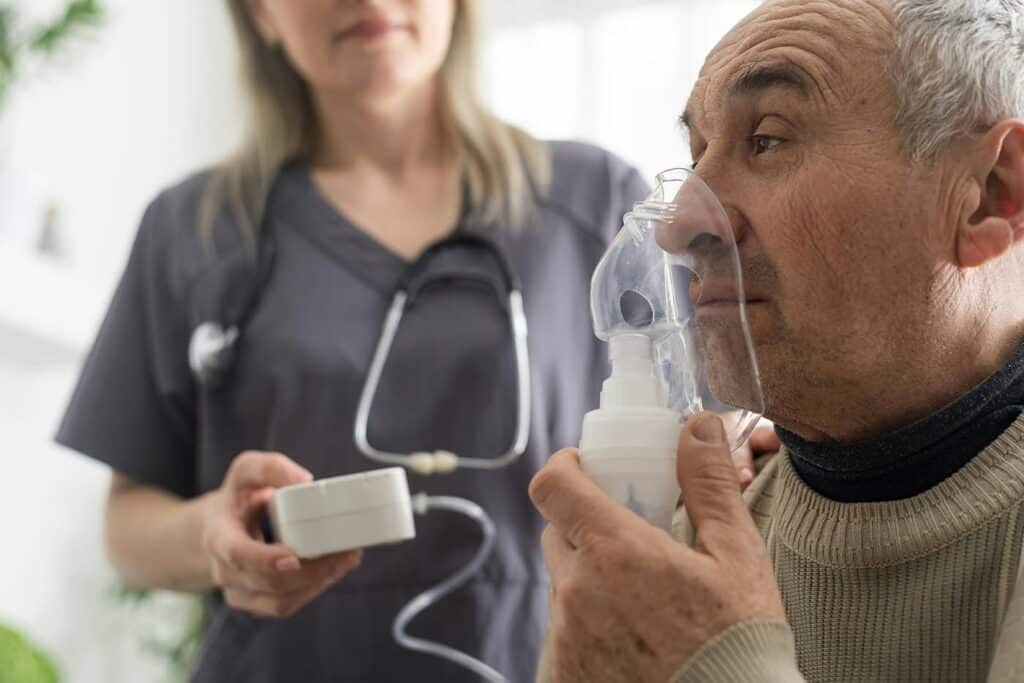
For seniors living with severe Chronic Obstructive Pulmonary Disease (COPD), supplemental oxygen therapy is a vital lifeline. It improves breathing, enhances stamina, and helps maintain independence at home. However, introducing oxygen tanks, concentrators, and long tubing into a residence creates new safety hazards and daily care challenges.
When oxygen equipment is mismanaged or subtle respiratory shifts go unnoticed, minor breathing distress can quickly escalate into a frightening emergency room visit. Understanding proper oxygen safety protocols and proactive symptom tracking is essential to keeping seniors safe, comfortable, and out of the hospital.
1. The Essential Rules of In-Home Oxygen Safety
Supplemental oxygen is not explosive, but it is a powerful combustion accelerant—meaning it causes fire to ignite faster, burn hotter, and spread rapidly.
                  ┌─────────────────────────────────────────┐
                  │    CRITICAL IN-HOME OXYGEN SAFETY       │
                  └────────────────────┬────────────────────┘
                                       │
        ┌──────────────────────────────┼──────────────────────────────┐
        ▼                              ▼                              ▼
 5-Foot Rule                   Tubing Management              Equipment Care
 ───────────                   ─────────────────              ──────────────
 • Keep 5+ ft away from        • Keep line under 50 ft        • Keep concentrator
   stoves, candles, heaters      to avoid tripping              12+ inches from walls
 • Zero smoking/vaping         • Secure loose coils away      • Keep backup tanks
   anywhere near equipment       from high-traffic pathways     upright & secured
- Enforce the 5-Foot Safe Zone: Keep oxygen concentrators and canisters at least 5 feet away from open flames, gas stoves, space heaters, candles, fireplaces, and electrical appliances that generate heat or sparks.
- Strict No-Smoking Policy: Smoking or vaping anywhere near oxygen therapy is the leading cause of home oxygen fires. Post clear “No Smoking / Oxygen in Use” signs on outer doors and inside the home.
- Avoid Petroleum-Based Products: Never apply Vaseline, Vicks VapoRub, or petroleum-based lip balms to a senior’s face or nose while using oxygen. Oils can ignite in an oxygen-enriched environment. Use water-based lubricants (such as KY Jelly or saline gels) to soothe nasal dryness instead.
- Prevent Tripping Hazards: Limit nasal cannula tubing to a maximum length of 50 feet to maintain proper pressure and prevent dangerous tangles. Use brightly colored tubing or clips to secure lines away from walkways.
2. Proactive COPD Flare-Up Prevention
Managing severe COPD requires monitoring subtle changes in breathing patterns, fatigue levels, and cough characteristics before a full respiratory crisis develops.
| Early Symptom Shift | Potential Risk | Action Required |
| Increased Breathlessness | Airway inflammation or fluid buildup | Check pulse oximeter; evaluate flow rate settings |
| Changes in Sputum Color/Volume | Developing bronchial infection | Note color changes (green/yellow/rust) & notify care team |
| Swelling in Ankles or Legs | Strain on the right side of the heart (Cor Pulmonale) | Monitor daily weight; report fluid retention immediately |
| Morning Headaches or Confusion | Carbon dioxide ($CO_2$) retention | Check breathing patterns; consult clinical nurse |
3. Energy Conservation Techniques for Daily Activities
Seniors with severe COPD expend massive amounts of energy simply breathing. Certified caregivers utilize specific techniques during daily activities of daily living (ADLs) to conserve oxygen and prevent exhaustion:
- Pursed-Lip & Diaphragmatic Breathing: Guiding the senior to inhale slowly through the nose and exhale through pursed lips (twice as long as the inhale) calms panic and keeps airways open longer.
- Seated Grooming & Bathing: Using a sturdy shower chair, handheld showerhead, and terrycloth bathrobes reduces physical exertion during hygiene routines.
- Pacing & Adaptive Tools: Breaking down morning dressing into small steps, placing frequently used items at waist height, and avoiding reaching or bending over.
4. Maryland Emergency & Power Outage Preparedness
In Maryland—where severe summer storms, icy winters, and regional power outages occur—homebound seniors relying on electric oxygen concentrators face unique vulnerabilities.
- Register with Utility Companies: Maryland residents should register with local utility providers (such as BGE, Pepco, Delmarva Power, or SMECO) for Critical Medical Needs status. This prioritizes power restoration during major outages.
- Maintain Backup Supply: Ensure your home always has full, non-electric backup oxygen cylinders (and key wrenches) readily accessible.
- Local Fire Department Notification: Inform your local county emergency services and fire station that an oxygen-dependent individual resides at the address.
🛡️ Protecting Maryland Seniors: Care Without Crisis with Vanguard Care Solutions
For families across Montgomery, Howard, Prince George’s, Anne Arundel, and Charles counties, managing severe COPD at home should never mean living in constant fear of the next breathing emergency.
Vanguard Care Solutions is a licensed Maryland Residential Service Agency (RSA) dedicated to bridging the gap between medical discharge and safe long-term home living through our Care Without Crisis framework.
       [ Hospital / Pulmonologist Care Plan ]
                          │
                          ▼
        ┌──────────────────────────────────┐
        │   Vanguard RN Clinical Intake    │ ── Oxygen safety audit & flow checks
        └─────────────────┬────────────────┘
                          │
                          ▼
        ┌──────────────────────────────────┐
        │   RN-Supervised In-Home Aide     │ ── Daily ADLs, pulse ox & hygiene
        └─────────────────┬────────────────┘
                          │
                          ▼
        ┌──────────────────────────────────┐
        │ Proactive Respiratory Escalation │ ── Early intervention before ER
        └──────────────────────────────────┘
How Vanguard Supports COPD & Oxygen Care at Home:
- RN Clinical Oversight: A Registered Nurse conducts an in-home environmental assessment, verifies oxygen equipment safety, sets up emergency protocols, and coordinates directly with your pulmonologist.
- Trained Aide Support: Certified aides assist with dignified bathing (protecting oxygen cannulas), light meal preparation, mobility, and energy-conserving daily routines.
- Pulse Oximetry & Symptom Tracking: Daily monitoring of oxygen saturation ($SpO_2$), sputum changes, and breathlessness allows our care team to spot early infection or flare-up signs.
- Immediate Escalation: If a senior shows signs of $CO_2$ retention or respiratory distress, our aides alert Vanguard’s RN care managers immediately—allowing for physician intervention long before a 911 emergency call becomes necessary.
Breathes Easier at Home with Clinical Peace of Mind
If your aging parent is transitioning home with oxygen therapy or struggling to manage severe COPD in Maryland, you don’t have to handle it alone. Contact Vanguard Care Solutions today for a complimentary phone consultation. If in-home care is a good fit, a registered nurse completes an in-home assessment (a fee applies) before services begin.
📞 Call Us: 301-327-1444
🌐 Visit: vanguardcaresolutions.com