
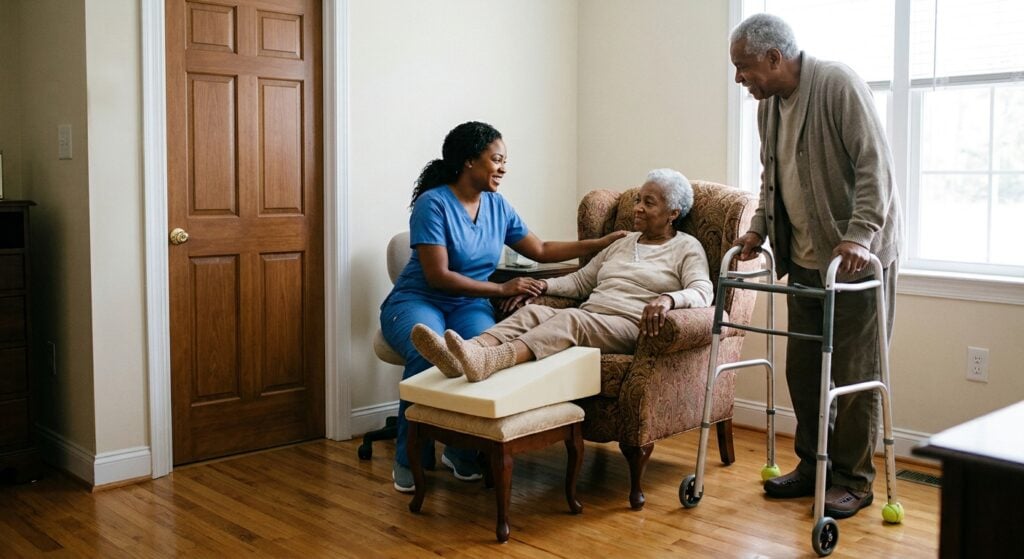
Chronic Venous Insufficiency (CVI) occurs when the tiny, one-way valves in the lower leg veins weaken or fail over time. Instead of pumping blood back up to the heart efficiently, fluid pools in the legs and ankles—a condition known as stasis. This persistent pooling leads to severe lower extremity edema (swelling), heavy legs, aching discomfort, and a significant loss of balance and physical mobility for aging adults.
For seniors living in Montgomery, Howard, Prince George’s, Anne Arundel, and Charles counties, heavy and swollen legs turn everyday activities into major fall risks. Simple tasks like standing from a chair, stepping into a shower, or walking around the house require structured physical support and routine circulation management.
Establishing a home care routine centered on scheduled leg elevation, low-impact exercise, safe transfers, and routine monitoring helps seniors maintain comfort, safety, and independence at home.
1. Daily Circulation Protocols: Balancing Elevation and Movement
Managing venous edema requires balancing gravity-assisted fluid drainage with low-impact physical movement to activate the natural calf muscle pump.
                  ┌─────────────────────────────────────────┐
                  │   DAILY CIRCULATION SUPPORT PROTOCOL    │
                  └────────────────────┬────────────────────┘
                                       │
        ┌──────────────────────────────┴──────────────────────────────┐
        ▼                                                             ▼
   Scheduled Leg Elevation                                     Paced Ankle & Leg Mobility
   ───────────────────────                                     ──────────────────────────
   • Elevate feet above heart level for 30 mins, 3–4x daily     • Guided low-impact walking intervals around the home
   • Utilize high-density contour wedges under calves           • Seated ankle pumps & foot flexes during rest periods
   • Avoid prolonged uninterrupted sitting or standing         • Frequent position shifts to encourage fluid movement
Essential Circulation Protocols for Seniors:
- True Gravity-Assisted Elevation: Resting legs on a standard footstool is usually insufficient to drain fluid. Legs should be elevated above heart level using supportive contour wedges while the senior rests in a comfortable, reclined position.
- Activating the Calf Muscle Pump: Short, guided walking intervals across clear home pathways force lower leg muscles to contract, helping pump pooled venous blood back toward the heart.
- Preventing Static Fluid Pooling: Prolonged sitting with feet dangling or standing still in one place forces fluid back down into the ankles. Build a predictable daily schedule alternating 30 to 45 minutes of seated rest with brief walking intervals and leg elevation.
2. Preventing Falls During Daily Transfers and Hygiene Routines
Lower leg edema alters a senior’s center of gravity and reduces ankle flexibility, making standing transfers and bathing especially hazardous.
| Daily Routine | Balance & Fall Hazards | Safe Joint-Sparing Adaptation |
| Seated Transfers | Rising from low, deep sofas or armchairs with heavy, stiff legs. | Sliding forward to the seat edge, planting feet flat on a non-skid surface, and pushing up using firm armrests. |
| Bathing & Showering | Standing on slippery tub or shower surfaces with heavy, unsteady legs. | Using a padded shower chair, secured non-slip rubber mats, and a handheld showerhead to bathe while seated. |
| Daily Footwear | Walking barefoot or in loose slippers that fail to support swollen feet. | Wearing supportive, non-skid shoes with wide toe boxes to accommodate swelling and preserve stability. |
Transfer & Mobility Guidelines:
- Paced Standing Transfers: Have the senior sit upright on the edge of the bed or chair for 30 seconds before standing to avoid sudden lightheadedness or balance loss.
- Environmental Safety Checks: Keep primary walking paths illuminated and entirely free of throw rugs, clutter, or loose electrical cords that could catch a toe during movement.
3. Daily Tracking and Vital Observations at Home
Monitoring lower extremity swelling and daily physical comfort helps families track mobility changes and report concerns to health providers before a minor issue turns into a medical crisis.
- Tracking Edema Changes: Observe variations in lower leg girth, fluid retention, or sudden weight shifts between morning and evening hours.
- Monitoring Mobility Comfort: Log daily stamina during walking, noting any sudden increases in leg heaviness, tightness, or fatigue.
- Hydration and Activity Records: Keep steady records of daily fluid intake, rest intervals, and elevated leg routines to ensure consistent care continuity across all daily shifts.
🛡️ The Vanguard Advantage: Care Without Crisis
Managing Chronic Venous Insufficiency and lower extremity edema at home requires routine consistency, physical support, and structured oversight. Vanguard Care Solutions is a licensed Maryland Residential Service Agency (RSA) serving families across Montgomery, Howard, Prince George’s, Anne Arundel, and Charles counties.
Through our Care Without Crisis framework, Vanguard delivers structured in-home support designed to maintain balance safety, promote healthy circulation routines, and prevent accidental falls.
       [ Comprehensive Home & Health Intake ]
                         │
                         ▼
  ┌──────────────────────────────────────────────┐
  │   Tailored Circulatory & Mobility Plan       │ ── Maps elevation schedules, mobility goals & safe transfers
  └──────────────────────┬───────────────────────┘
                         │
                         ▼
  ┌──────────────────────────────────────────────┐
  │   Supervised Professional Caregiver Support │ ── Assists with daily hygiene, safe transfers & ADLs
  └──────────────────────┬───────────────────────┘
                         │
                         ▼
  ┌──────────────────────────────────────────────┐
  │    Proactive Symptom Escalation System       │ ── Rapid communication before acute health crises occur
  └──────────────────────────────────────────────┘
How Vanguard Supports Senior Mobility and Circulation in Maryland:
- Comprehensive In-Home Intake: Our team conducts an extensive in-home intake assessment, evaluating living spaces for fall risks, assessing mobility baselines, and establishing structured care plans tailored to individual health needs.
- Supervised Caregiver Support: Trained caregivers assist with steady physical support during transfers and walking, aid with gentle bathing routines, assist with prescribed footwear, and ensure structured leg elevation schedules are maintained.
- Vigilant Shift Documentation: Caregivers maintain detailed shift logs tracking daily leg swelling observations, mobility effort, and daily activity completion, keeping family members fully informed and reassured.
- Proactive Symptom Escalation: Vanguard caregivers are trained to observe early warning indicators of circulatory or mobility changes—such as sudden increases in leg swelling, acute calf discomfort, or sudden loss of balance—and report them immediately through our structured escalation system, ensuring prompt coordination before a hospital readmission occurs.
Preserve Comfort, Mobility, and Safety at Home
Keep your loved one comfortable, safe, and mobile in their home environment. Contact Vanguard Care Solutions today to learn how our Care Without Crisis home care support plan brings structure and peace of mind to families across Central Maryland.
📞 Call Us: 301-327-1444
🌐 Visit: vanguardcaresolutions.com