
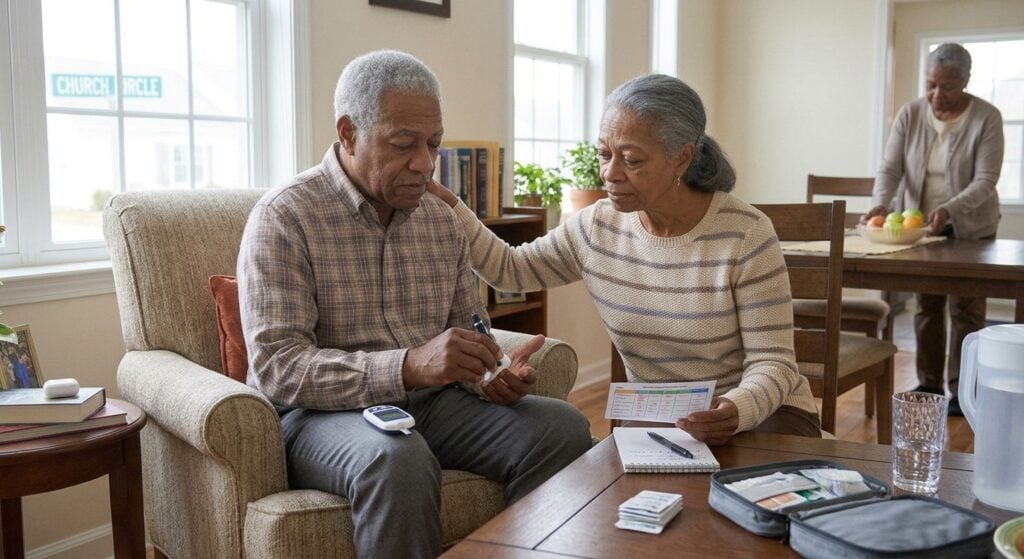
Managing diabetes in older adulthood requires a delicate balance between metabolic control, physical safety, and daily routine. As body composition changes and sensory perception dims, seniors living with Type 2 diabetes face heightened risks of sudden low blood sugar (hypoglycemia), nerve damage (neuropathy), slow-healing wounds, and skin breakdown.
Hypoglycemia is particularly dangerous for aging adults because its symptoms—such as dizziness, confusion, or weakness—are easily mistaken for age-related fatigue or cognitive changes. A sudden drop in blood glucose can lead to balance loss, fainting, or acute medical emergencies.
For families across Montgomery, Howard, Prince George’s, Anne Arundel, and Charles counties, maintaining diabetic stability at home extends far beyond checking blood sugar levels. It requires structured meal routines, daily skin and foot audits, hydration tracking, and constant observation for subtle physical changes.
1. Preventing and Recognizing Hypoglycemia at Home
Hypoglycemia occurs when blood glucose drops below safe operating thresholds (typically under 70 mg/dL). In older adults, low blood sugar can present subtly without typical warning signs like sweating or trembling—a phenomenon known as hypoglycemia unawareness.
                  ┌─────────────────────────────────────────┐
                  │    RECOGNIZING HYPOGLYCEMIA IN SENIORS  │
                  └────────────────────┬────────────────────┘
                                       │
        ┌──────────────────────────────┼──────────────────────────────┐
        ▼                              ▼                              ▼
 Behavioral & Mood Shifts       Neurological Symptoms           Physical Indicators
 ────────────────────────       ─────────────────────           ───────────────────
 • Sudden irritability or       • Uncharacteristic confusion     • Cold, clammy skin or paleness
   unexplained anxiety            or sudden drowsiness          • Unsteadiness during normal
 • Glazed expression or slow    • Slurred speech or trouble       walking or transfers
   verbal responses               focusing on conversations
Essential Prevention Protocols:
- Consistent Meal Pacing: Skipping meals or delaying eating after taking prescribed diabetic medications is the primary trigger for hypoglycemia. Meals and snacks must be served on a predictable daily schedule.
- Balanced Meal Composition: Every meal should combine complex carbohydrates, lean protein, and healthy fats to slow glucose absorption and prevent sharp spikes followed by sudden crashes.
- Rapid-Response Preparation: Keep fast-acting carbohydrates readily accessible throughout the home—such as fruit juice, glucose tablets, or honey—to quickly raise blood sugar if early symptoms appear.
2. Daily Foot Integrity and Neuropathy Inspection
Diabetic peripheral neuropathy reduces sensation in the feet and lower legs, meaning a senior may not feel a blister, small cut, or pressure point caused by tight footwear. Left unnoticed, minor skin tears can rapidly develop into deep ulcers or systemic infections.
  [ Morning Inspection ]  ──► Check soles, heels & between toes under bright lighting
  [ Moisture Control ]    ──► Wash daily in lukewarm water; thoroughly dry between toes
  [ Protective Footwear ] ──► Never allow walking barefoot; inspect shoes for internal rough spots
| Area of Focus | Inspection Routine | Risk Prevention Goal |
|---|---|---|
| Visual Foot Audits | Inspecting soles, heels, and webbing between toes daily under clear lighting. | Catches redness, blisters, or skin cracks before they become open ulcers. |
| Skin Hydration & Care | Applying moisturizing lotion to tops and bottoms of feet, avoiding the spaces between toes. | Prevents dry skin cracking while keeping interdigital areas dry to prevent fungal growth. |
| Nail & Callus Protection | Ensuring toenails are trimmed straight across and calluses are monitored without cutting. | Prevents ingrown nails and tissue trauma from home bathroom surgical tools. |
| Footwear Inspections | Checking inside slippers and shoes for loose seams, pebbles, or worn linings before putting them on. | Eliminates friction points that cause unnoticed pressure sores on insensate feet. |
3. Hydration Pacing and Skin Breakdown Prevention
High blood glucose levels cause the kidneys to excrete excess sugar through urine, leading to chronic dehydration. Dehydration weakens skin elasticity, increases fall risks due to blood pressure drops (orthostatic hypotension), and worsens confusion.
- Structured Hydration Pacing: Offer small, regular sips of water throughout the day rather than relying on the senior to ask for drinks, as thirst sensation diminishes with age.
- Skin Pressure Offloading: Encourage regular position shifts for seniors with reduced mobility to prevent sustained pressure on heels, tailbone, and hips where skin integrity is compromised.
- Tracking Daily Output: Monitor changes in urinary frequency or skin turgor to ensure adequate fluid balance is maintained consistently.
🛡️ The Vanguard Advantage: Care Without Crisis
Maintaining daily diabetic stability demands routine consistency, continuous vigilance, and proactive monitoring. Vanguard Care Solutions is a licensed Maryland Residential Service Agency (RSA) serving families across Montgomery, Howard, Prince George’s, Anne Arundel, and Charles counties.
Through our Care Without Crisis framework, Vanguard delivers structured in-home support designed to maintain metabolic balance, protect skin integrity, and prevent emergency health events.
       [ Comprehensive Home & Health Intake ]
                         │
                         ▼
  ┌──────────────────────────────────────────────┐
  │   Tailored Diabetic Routine Care Plan        │ ── Maps meal timing, hydration & daily foot audits
  └──────────────────────┬───────────────────────┘
                         │
                         ▼
  ┌──────────────────────────────────────────────┐
  │   Supervised Professional Caregiver Support │ ── Assists with balanced meal prep, hygiene & ADLs
  └──────────────────────┬───────────────────────┘
                         │
                         ▼
  ┌──────────────────────────────────────────────┐
  │    Proactive Symptom Escalation System       │ ── Rapid communication before diabetic crises occur
  └──────────────────────────────────────────────┘
How Vanguard Supports Diabetic Stability at Home:
- Comprehensive Care Intake: Our team conducts a thorough in-home intake assessment, evaluating daily nutritional habits, mobility baselines, and environmental risk factors to build a structured, client-centered care plan.
- Supervised Caregiver Support: Trained caregivers assist with preparing balanced, diabetic-friendly meals on a strict schedule, encourage steady hydration, aid with daily skin and hygiene routines, and support safe walking and transfers.
- Vigilant Shift Documentation: Caregivers record meal completion, fluid intake, daily physical observations, and vital signs, providing family members with transparent and dependable shift updates.
- Proactive Symptom Escalation: Vanguard caregivers are trained to observe early warning signs of metabolic instability—such as uncharacteristic lethargy, cold sweats, skin redness, or subtle balance changes—and report them immediately through our structured escalation system, ensuring prompt coordination before an emergency room visit is needed.
Maintain Health and Balance Comfortably at Home
Protect your loved one’s health with structured, dependable daily care. Contact Vanguard Care Solutions today to learn how our Care Without Crisis home support plan brings safety, consistency, and peace of mind to your family across Central Maryland.
📞 Call Us: 301-327-1444
🌐 Visit: vanguardcaresolutions.com