
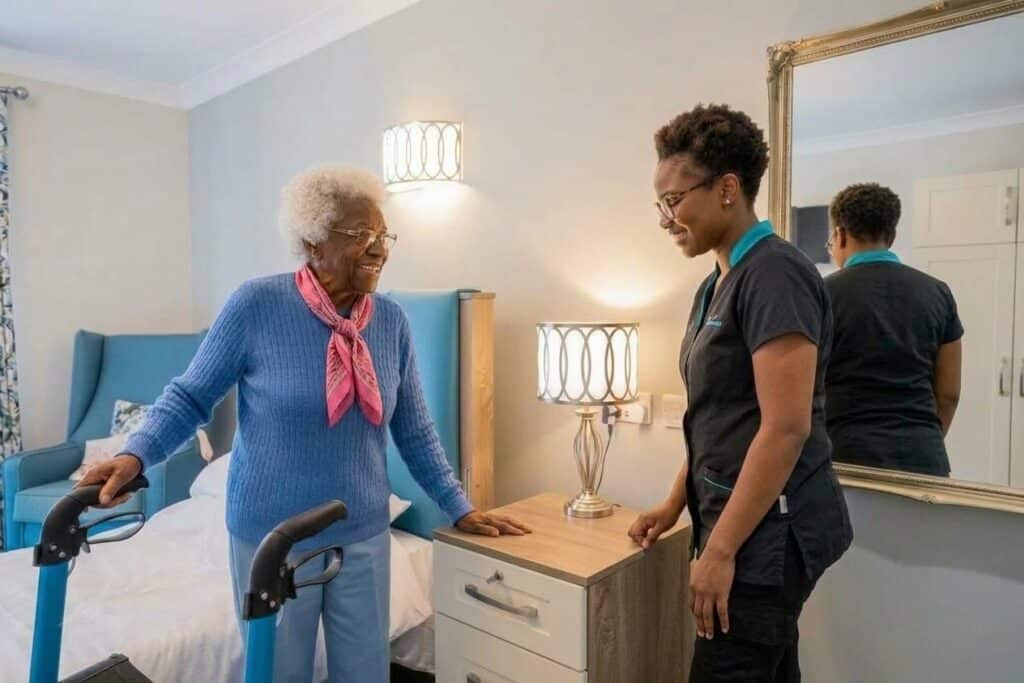
For seniors living with chronic lung conditions, immunocompromised health, or recovering from recent hospital stays, maintaining respiratory health is a year-round priority. While vaccinations provide a critical layer of defense against viruses like influenza, RSV, COVID-19, and pneumococcal pneumonia, vaccines alone do not eliminate the risk of severe respiratory distress or hospital readmissions.
For homebound seniors across Montgomery, Howard, Prince George’s, Anne Arundel, and Charles counties, maintaining a safe home environment requires a dual strategy: rigorous in-home infection control and proactive respiratory tracking.
Catching subtle breathing changes early prevents minor respiratory irritation from escalating into a acute medical crisis.
1. High-Touch Infection Control in the Home Environment
Respiratory pathogens spread rapidly through airborne droplets and contaminated household surfaces. Implementing structured hygiene protocols significantly lowers the risk of household transmission and cross-contamination.
                  ┌─────────────────────────────────────────┐
                  │    IN-HOME INFECTION CONTROL PILLARS    │
                  └────────────────────┬────────────────────┘
                                       │
        ┌──────────────────────────────┼──────────────────────────────┐
        ▼                              ▼                              ▼
 Surface Disinfection           Air Quality & Flow              Hygiene Standards
 ────────────────────           ──────────────────              ─────────────────
 • Daily cleaning of doorknobs, • HEPA filtration & humidity    • Strict hand hygiene upon entry
   remotes & grab bars            control (30–50% target)       • Masking during active symptoms
 • Sanitizing phone screens     • Proper ventilation in high-   • Proper disposal of used tissues
   & mobility equipment           traffic living spaces           & personal care items
Essential Environmental Safeguards:
- Targeted Surface Disinfection: Disinfect high-touch surfaces daily—including doorknobs, light switches, TV remotes, phone screens, microwave handles, and walker handgrips—using EPA-certified hospital-grade disinfectants.
- Indoor Air Quality Management: Maintain healthy indoor humidity levels between 30% and 50%. Dry air irritates nasal passages, making mucous membranes more vulnerable to viral entry. Utilize HEPA air purifiers in main living rooms and bedrooms to filter circulating airborne particles.
- Hand Hygiene Protocols: Establish a mandatory hand-washing routine for all family members and visitors upon entering the home, before preparing meals, and after personal care tasks.
2. Proactive Respiratory Tracking: Catching Early Shifts
Older adults often do not display typical infection signs—such as a high fever—due to age-related changes in immune response. Instead, respiratory decline often presents as subtle physical or behavioral shifts.
| Early Symptom Shift | Potential Clinical Indicator | Daily Tracking Action |
| Slight Drop in $SpO_2$ (Oxygen Level) | Impaired gas exchange / early lung congestion | Log daily pulse oximeter readings at rest and after mild activity. |
| Increased Respiratory Rate (>20 breaths/min) | Early respiratory strain or compensation | Count breaths per minute during quiet rest periods. |
| Slight Cough or Secretion Changes | Airway irritation or fluid accumulation | Note changes in cough frequency, depth, or sputum color/thickness. |
| Sudden Lethargy or Loss of Appetite | Atypical infection response in seniors | Monitor daily food/water intake and sudden shifts in fatigue levels. |
| Atypical Confusion or Disorientation | Hypoxia (low oxygen) or systemic infection | Assess mental clarity during morning and evening routines. |
3. Balancing Hydration and Energy Conservation
When managing respiratory vulnerability, two daily priorities determine how effectively a senior maintains stability at home:
- Hydration to Thin Secretions: Dehydration causes bronchial mucus to thicken, making it difficult for seniors to clear their airways. Offering small, frequent sips of water, broth, or decaffeinated tea throughout the day keeps secretions thin and easier to expectorate.
- Energy-Pacing During Personal Care: Breathing requires significantly more physical effort during periods of respiratory fatigue. Breaking down daily hygiene—such as using a shower chair, pacing morning dressing, and organizing rest intervals—prevents oxygen desaturation caused by physical exertion.
🛡️ The Vanguard Advantage: Care Without Crisis
Preventing acute respiratory crises requires consistent daily oversight and structured clinical planning. Vanguard Care Solutions is a licensed Maryland Residential Service Agency (RSA) serving families across Montgomery, Howard, Prince George’s, Anne Arundel, and Charles counties.
Through our Care Without Crisis initiative, Vanguard delivers structured, professional in-home care that keeps seniors safe, stable, and out of the hospital.
       [ Comprehensive Clinical Care Intake ]
                         │
                         ▼
  ┌──────────────────────────────────────────────┐
  │  Personalized Health & Respiratory Protocols │ ── Establishes baseline vitals & hydration goals
  └──────────────────────┬───────────────────────┘
                         │
                         ▼
  ┌──────────────────────────────────────────────┐
  │   Supervised Professional Caregiver Support │ ── Daily vital checks, hygiene & meal prep
  └──────────────────────┬───────────────────────┘
                         │
                         ▼
  ┌──────────────────────────────────────────────┐
  │    Proactive Care Management Escalation      │ ── Alerts physicians before respiratory crises
  └──────────────────────────────────────────────┘
How Vanguard Supports Year-Round Respiratory Health:
- Comprehensive Care Planning: A professional care manager conducts a thorough in-home assessment to review health history, establish baseline vital parameters, and design a customized care routine aligned with physician guidelines.
- Daily Vital & Symptom Tracking: Professional caregivers assist with daily pulse oximetry tracking, temperature checks, fluid intake logging, and monitoring for subtle physical shifts.
- Strict In-Home Hygiene Standards: Vanguard caregivers adhere to rigorous infection control standards, ensuring clean environments, proper PPE usage, and thorough hand hygiene during all personal care tasks.
- Proactive Symptom Escalation: Caregivers are trained to identify early red flags—such as minor oxygen drops, subtle breathing changes, or uncharacteristic confusion—and report them immediately to our care management team, ensuring swift physician coordination long before an emergency room visit becomes necessary.
Protect Your Loved One’s Respiratory Health
Don’t wait for a subtle symptom to turn into a health emergency. Contact Vanguard Care Solutions today to speak with our clinical care team and learn how our Care Without Crisis home support plan protects your family.
📞 Call Us: 301-327-1444
🌐 Visit: vanguardcaresolutions.com